The EB2026 International Congress in São Paulo, Brazil, marked a major milestone for the global Epidermolysis Bullosa (EB) community and was the first international EB congress of this scale hosted in South America. With an intense and wide-ranging program, the congress brought together participants from across continents, disciplines, and sectors to share progress, address challenges, and align on future priorities. Hosting the meeting in Brazil was particularly significant, helping to expand access to EB knowledge and expertise in South America and strengthen global inclusivity.
EB RI presence at EB2026
The EB Research Institute (EB RI) was represented at EB2026 by Hana Cernecka, Christina Guttmann-Gruber, Ulrich Koller, and Josefina Pinon Hofbauer, who contributed actively across scientific, preclinical, and strategic sessions.
Christina Guttmann-Gruber delivered a selected oral presentation presenting EB RI’s EB cell atlas and its importance in identifying pathogenic cell states and therapeutic targets for drug development. This work was also presented as a poster during the poster session on 21 January. During the same session, Josefina Pinon Hofbauer presented EB RI’s R&D platform to support translational drug development in EB.
On 22 January, Christina Guttmann-Gruber chaired the session Preclinical Studies – Part 2, emphasizing the need for patient-derived cells and samples to enable robust therapy development, particularly for gene-editing approaches. This was followed by an invited talk from Ulrich Koller who discussed our recent advances in prime editing for COL17A1 in junctional epidermolysis bullosa.
Overall, EB RI's contributions were well received, generating strong interest, lively discussion, and scientific exchange throughout the meeting.
A Diverse and Interdisciplinary Meeting
The congress was characterized by the diversity of its participants, including nurses, clinicians, researchers, patient organizations, and representatives from industry. This interdisciplinary mix reinforced the importance of collaboration across sectors to advance EB research and care. Sessions highlighted progress made over the past five years, including recently approved therapies, alongside promising approaches currently in development—reflecting clear momentum as a community.
More Than Their Skin: Youth and Family Voices
Particularly powerful and inspiring was hearing directly from young people living with EB and their families. Their stories underscored not only the challenges they face, but also their achievements, ambitions, and determination to define their lives on their own terms. Their message was clear: they are more than their skin, and they refuse to let EB define their limits.
These perspectives were complemented by parents who shared their journeys of learning to step back—creating space for their children to explore independence, pursue their goals, and experience life fully, even while carrying the very real fears that come with caring for a child with EB.
Clinical and Scientific Insights
The program provided a strong overview of published and ongoing research while also offering new insights into the clinical reality of EB. Highlights included exposure to procedures such as gastrostomy, and emerging evidence that tooth resorption in EB may involve underlying pathogenic mechanisms, rather than being solely related to oral hygiene. Additionally, several presentations emphasized persistent knowledge gaps, particularly around genotype–phenotype correlations and the influence of genetic, epigenetic, and environmental factors on disease severity. Key scientific highlights included advances in gene editing-based strategies and AI-based diagnostic approaches for RDEB-associated squamous cell carcinoma.
The congress also confronted the structural and systemic barriers limiting progress. For example, Andrew South described the challenges of advancing the repurposed drug rigosertib into clinical trials for RDEB-associated squamous cell carcinoma, including difficulties in securing sustained funding and achieving regulatory recognition of RDEB-SCC as a distinct tumor entity. These challenges clearly illustrated where stronger coordination and advocacy across the EB community are urgently needed.
Innovation Arena and Strategic Alignment
While the scientific updates were essential, the Innovation Arena, hosted by DEBRA Research on Friday, 23 January at the Albert Einstein Teaching and Research Center, offered a forward-looking perspective on how innovation and collaboration can accelerate progress in EB research.
The workshop included an energizing and collaborative brainstorming session, where stakeholders from across the EB community came together to identify the most critical challenges to tackle over the next five years in pursuit of curative treatments by 2035. This collective alignment marks a powerful first step— one that now calls for sustained engagement, shared responsibility, and coordinated action to turn ambition into impact.
EB RI as a Translational Hub for EB Research
Innovators such as Alex Hersham (ReadOn Therapeutics) highlighted the need for highly specialized research environments with deep EB expertise and experience across multiple preclinical models, pointing to institutes such as the EB Research Institute and Queen Mary University of London as potential key enablers of efficient progression from discovery to preclinical validation.
EB2026 has already led to tangible outcomes, with multiple researchers connecting with the EB Research Institute to initiate collaborations and knowledge exchange. In a rare and complex disease field such as EB, access to specialized expertise and shared infrastructure is essential for advancing therapeutic development.
Concluding Insights
Overall, EB2026 highlighted both the significant scientific progress made in recent years and the critical gaps that remain in understanding and treating EB. The congress reinforced the need for coordinated, translational research efforts, robust preclinical models, and sustained collaboration across disciplines to accelerate the development of effective and curative therapies.
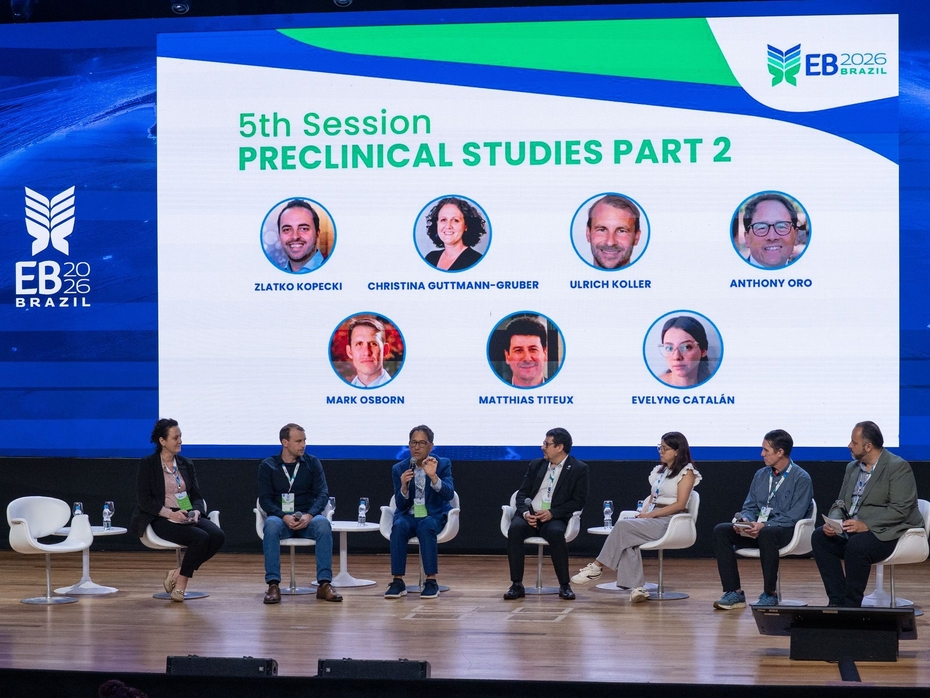
Dr. Christina Guttmann-Gruber and Dr. Ulrich Koller shared their insights at the panel discussion following their lectures in the session Preclinical studies Part 2
© EB2026 | DEBRA Brasil
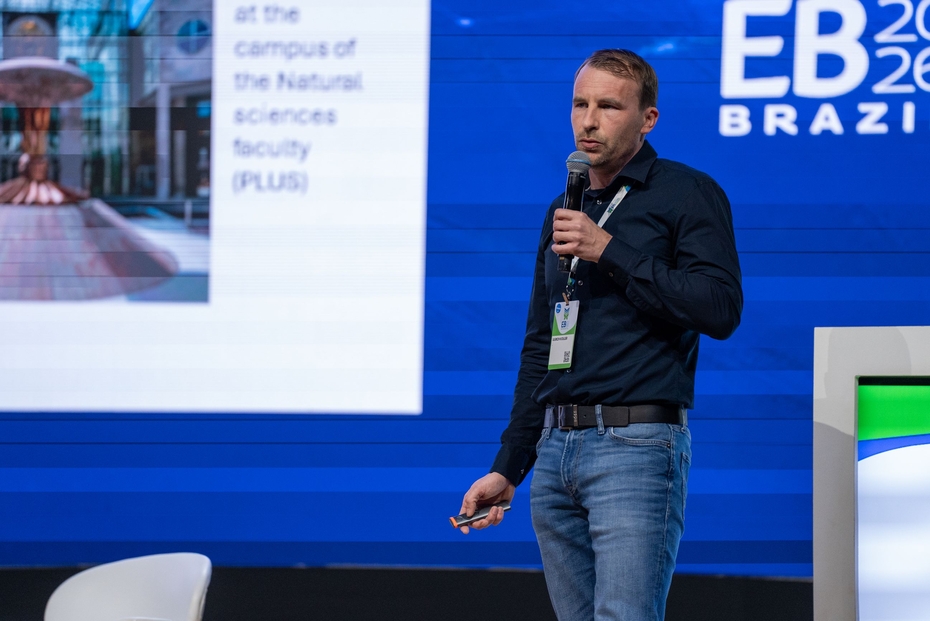
Dr. Ulrich Koller took a deep dive into EB RI's gene therapy efforts for JEB
© EB2026 | DEBRA Brasil
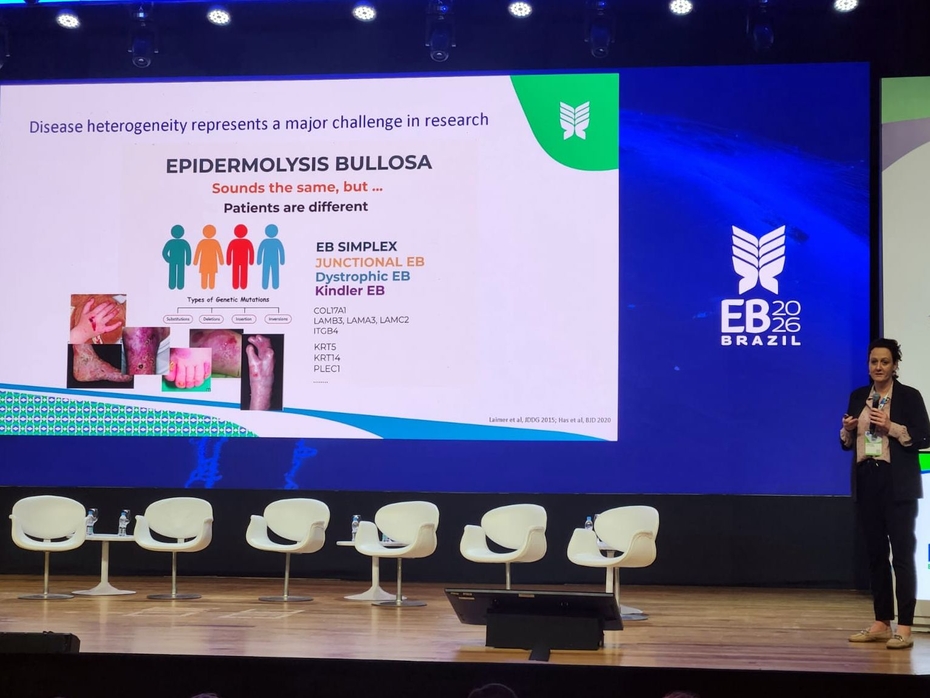
Dr. Christina Guttmann Gruber gave an inspiring talk on EB RI's EB Biobank activities
© EB2026 | DEBRA Brasil
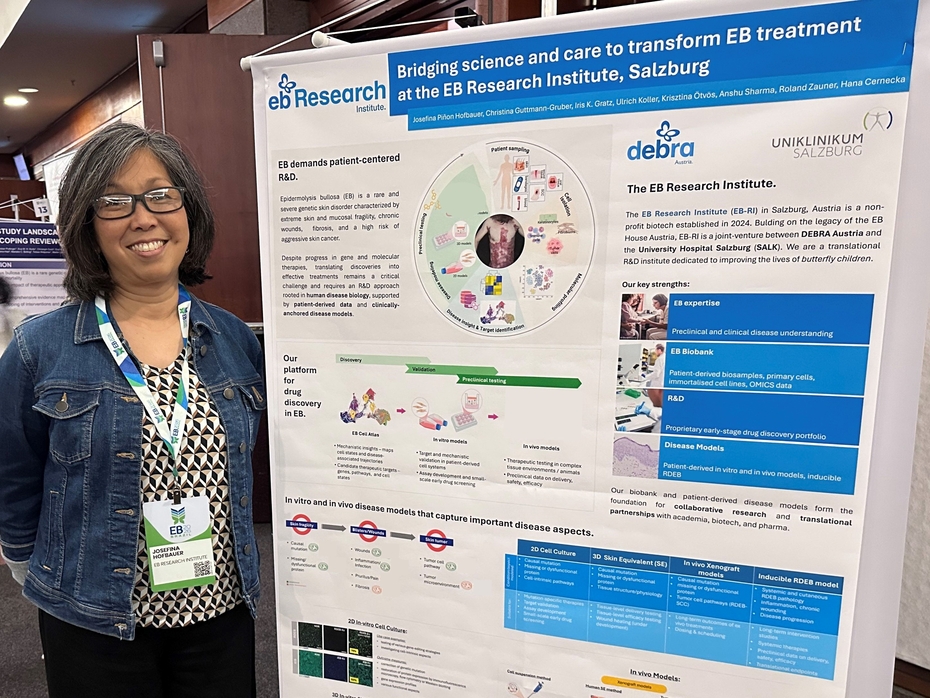
Dr. Josefina Piñón Hofbauer presenting her poster on EB Research Institute's drug discovery capabilities
© EB Research Institute
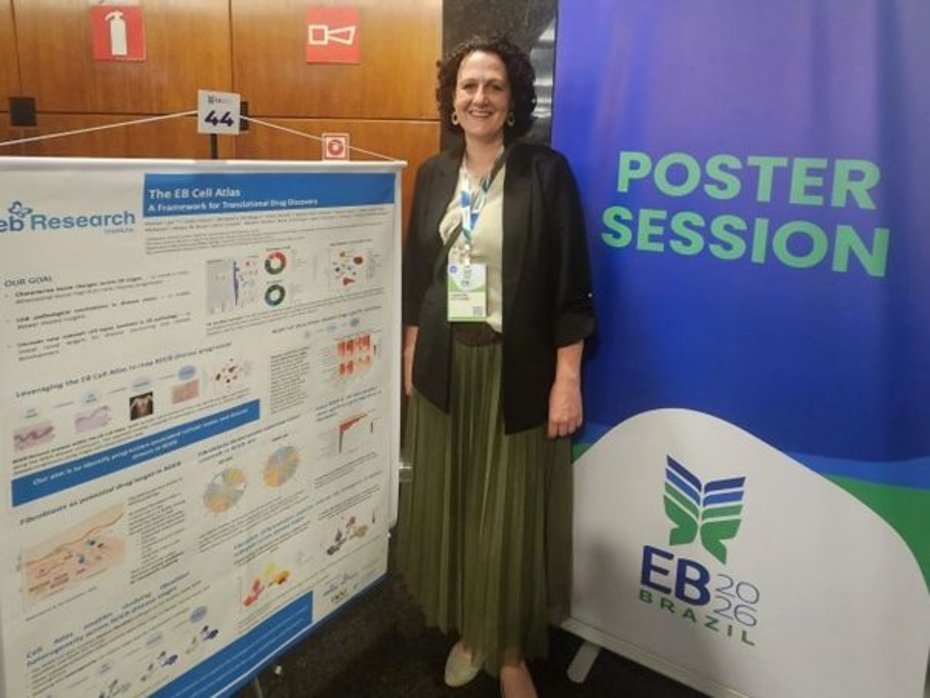
Dr. Christina Guttmann-Gruber with her poster highlighting EB Cell Atlas importance for new target identification
© EB Research Institute
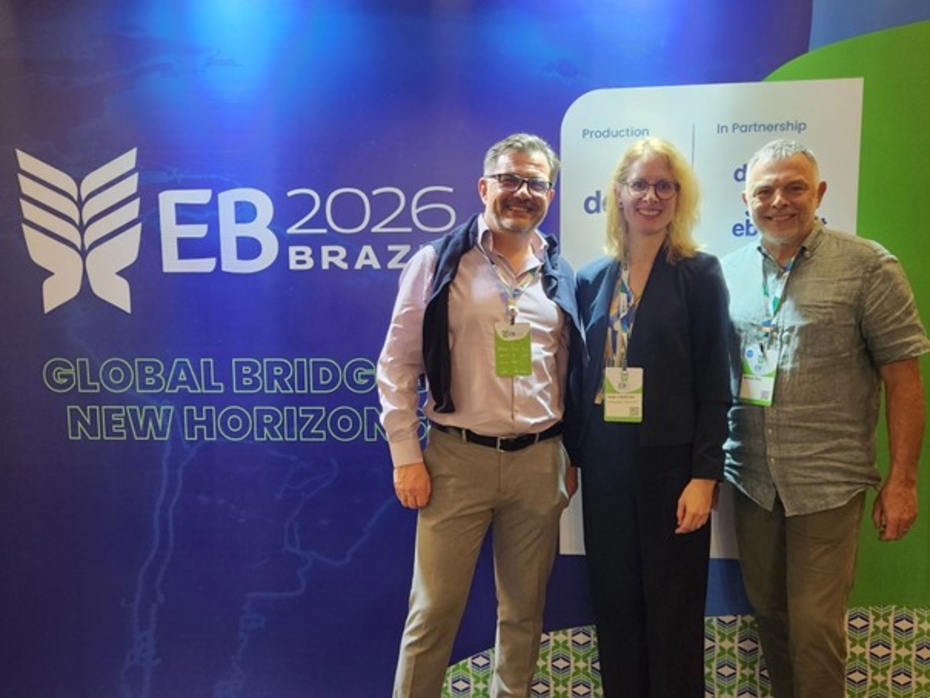
Andreas Holzer (Finance & Controlling, DEBRA Austria) and EB RI Managing Directors Dr. Hana Cernecka and Dr. Rainer Riedl © EB Research Institute
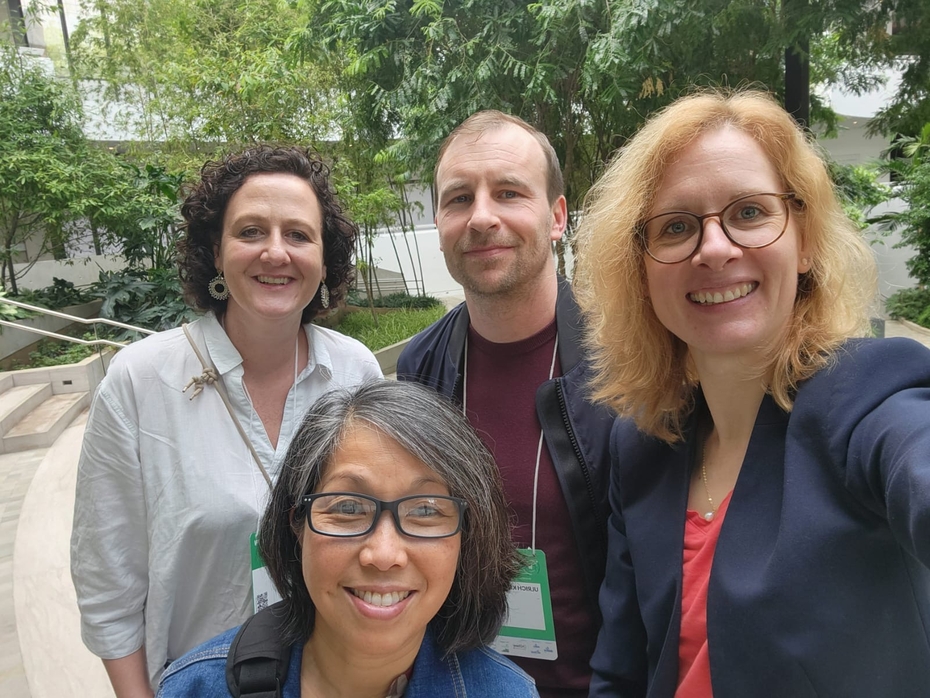
The EB RI team gave their input at the Innovation Arena at Albert Einstein Teaching and Research Center
© EB Research Institute