
Our strategy to target key aspects of EB
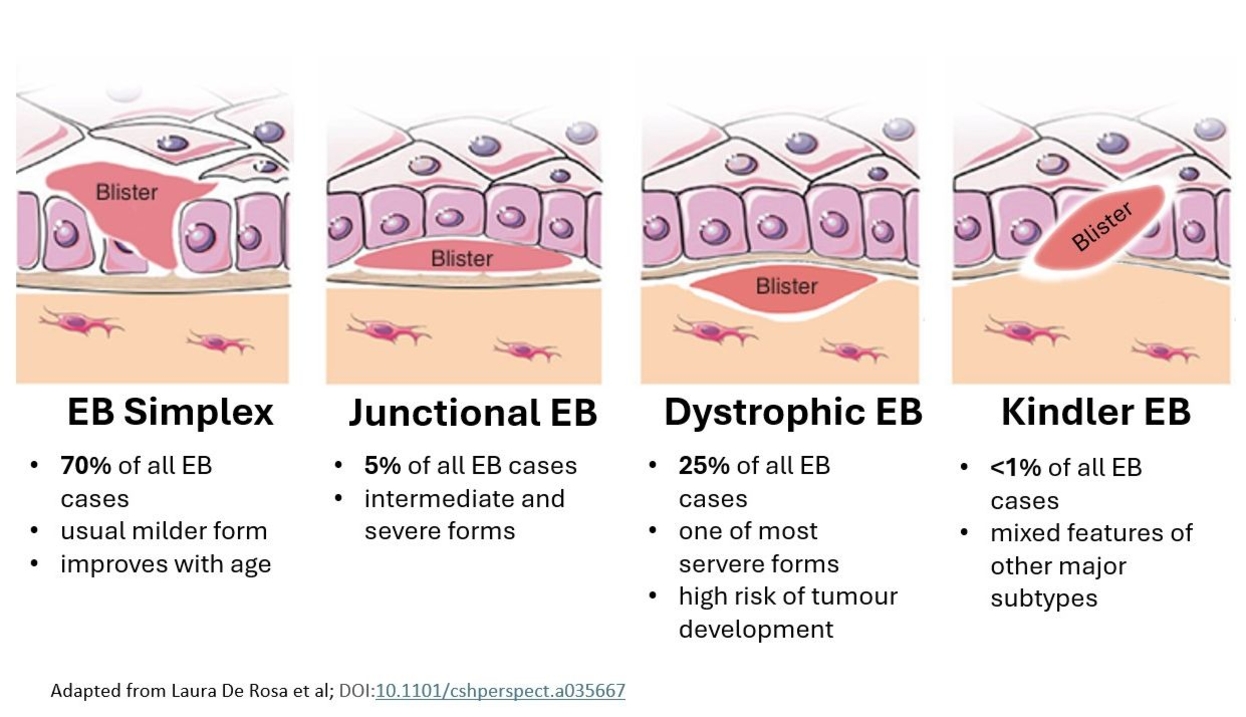
Epidermolysis bullosa (EB) has a wide range of symptoms and associated conditions. Depending on the affected skin layer(s), EB can be categorized into 4 main types: EB Simplex, Junctional EB, Dystrophic EB and Kindler Syndrome. However, EB is not just a skin disease and has far-reaching effects on the entire body. EB is currently incurable.
EBRI’s scientific strategy is embedded in the broader DEBRA universe with a focus on recessive dystrophic EB (RDEB) and junctional EB (JEB). Due to the complex clinical features of EB, research is directed on various key areas.
We are advancing our efforts in EB in collaboration with other research institutions and clinics as well as industry partners.
Junctional EB
Our Junctional EB (JEB) program focuses on developing durable, disease-modifying treatments for patients with generalized intermediate forms, aiming to significantly reduce skin fragility and life limiting complications.
Program focus
We prioritize therapeutic strategies that address the underlying genetic defects in key JEB genes such as COL17A1 and LAMB3, while maintaining a clear focus on patients with burdensome JEB phenotypes. By targeting these core adhesion molecules at the dermal–epidermal junction, our goal is to restore clinically meaningful skin stability and improve long term outcomes.
Therapeutic strategy
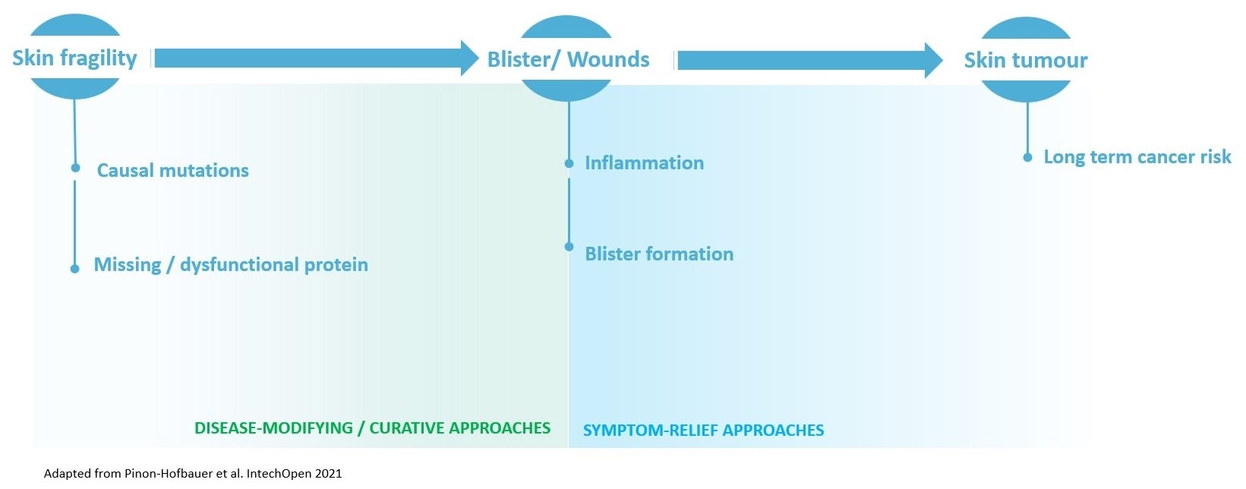
Our R&D strategy emphasizes causal therapies that correct the genetic root cause of JEB (such as LAMB3, COL17A1 mutations), complemented by approaches that offer symptomatic relief for more immediate clinical benefit. This dual path allows us to combine durable gene based interventions with supportive modalities that rapidly reduce blistering, inflammation and burdensome chronic wounds.
Translational platform
We leverage our EB biobank, advanced preclinical models, and translational expertise to systematically test and refine therapeutic candidates from concept to clinic. Through this integrated platform, we aim to overcome key barriers in efficacy, scalability, and access, bringing transformative therapies closer to patients living with JEB worldwide.
Recessive dystrophic EB
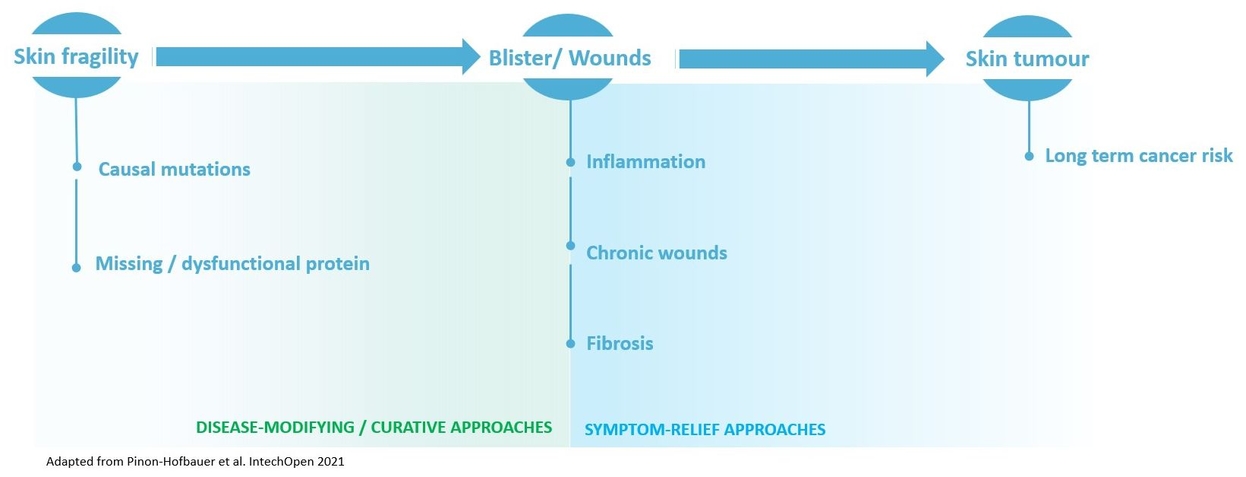
We focus our Recessive Dystrophic EB (RDEB) program on developing durable, disease modifying treatments that restore type VII collagen and reduce the systemic burden of chronic inflammation, fibrosis, and long term cancer risk.
Program focus
Our priority in RDEB is to develop therapies that restore functional type VII collagen and thereby rebuild anchoring fibrils at the dermal–epidermal junction, with the goal of stabilizing skin and mucosal integrity. In addition to advancing programs directly addressing RDEB-SCC, we aim to intervene early in the disease course, before irreversible scarring and squamous cell carcinoma (SCC) risk accumulate, to change long term outcomes for patients.
Therapeutic strategy
The central objective of our R&D is to restore type VII collagen in a way that is durable, scalable, and applicable across severe RDEB phenotypes. In parallel, we maintain a clear focus on near term symptomatic benefit by addressing chronic inflammation and fibrosis, ensuring patients experience meaningful improvements while transformative therapies are developed.
Our strategy follows a dual track program: one track dedicated to causal therapies that correct or replace COL7A1, and a second track for supportive therapies that enhance wound healing and reduce inflammation and subsequent complications. By advancing both tracks in concert, we seek to deliver immediate clinical relief while building toward long lasting, disease modifying solutions for people living with RDEB.
Translational platform
We leverage our EB biobank, advanced preclinical models, and translational expertise to systematically test and refine therapeutic candidates from concept to clinic. Through this integrated platform, we aim to overcome key barriers in efficacy, scalability, and access, bringing transformative therapies closer to patients living with RDEB worldwide.